State income taxes can be part of NFL free-agency conversations, but they are rarely the deciding factor in where a player signs. That idea came up after defensive end John Franklin-Myers chose the Tennessee Titans over the San Francisco 49ers, despite strong interest from San Francisco.
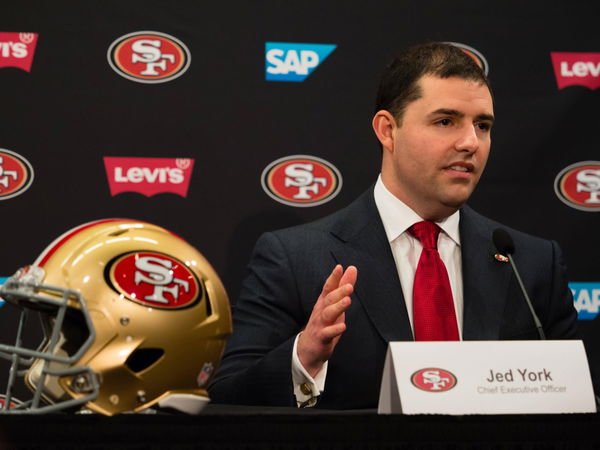
49ers owner Jed York downplayed the role of taxes, suggesting that agents often mention them only after a deal falls through. He said the explanation didn’t reflect the real reason for Franklin-Myers’ decision. Instead, York pointed to the player’s prior relationship with coach Robert Saleh as the more meaningful factor. He also noted that players have joined the 49ers from states without income tax, arguing that taxes are not a major obstacle.
When free agency opened in March 2026, Franklin-Myers—coming off two standout seasons with the Denver Broncos—was one of the more sought-after defensive linemen. He ultimately signed a three-year, $63 million contract with Tennessee, including $42 million guaranteed. That deal significantly increased his annual earnings compared to his previous $7.5 million per year contract in Denver. Although San Francisco showed serious interest, negotiations never resulted in a signing.
From a financial perspective, the tax argument has some merit. California has the highest state income tax rate in the U.S. at 13.3%, and under the NFL’s “jock tax” system, players pay taxes based on where games and practices take place. For a player earning around $21 million annually, the difference between playing in a high-tax state like California and a no-income-tax state like Tennessee could exceed $2 million per year. Teams in states such as Tennessee, Texas, Nevada, and Florida often highlight this advantage during recruitment.
However, in Franklin-Myers’ case, personal connections appear to have mattered more. When Saleh became head coach of the Titans in early 2026, the player reportedly immediately viewed Tennessee as his preferred destination. The two previously worked together with the New York Jets, where Franklin-Myers developed into a productive starter. Under Saleh’s leadership, he recorded 106 tackles and 14.5 sacks over three seasons and credited the coach for his growth. After signing with Tennessee, he emphasized trust, familiarity, and leadership as the primary reasons for his choice.
San Francisco’s offseason moves also show that taxes don’t necessarily deter players. Veteran wide receiver Mike Evans, who previously played for the Tampa Bay Buccaneers in a no-tax state, signed a three-year, $42 million deal with the 49ers. Despite the financial difference, he opted to move to California.
Similarly, Christian Kirk joined the 49ers on a one-year deal after playing for the Houston Texans, another team based in a no-income-tax state. Offensive lineman Rob Jones also made the switch from the Dallas Cowboys without tax concerns preventing the move. Other California teams like the Los Angeles Rams and Los Angeles Chargers have likewise continued to attract talent.
Overall, while tax differences can influence financial outcomes and may be part of negotiations, factors such as relationships, coaching fit, team culture, and career opportunities often play a much larger role in where NFL players ultimately decide to sign.